John Hawkins Jr.
Leadership Team Execution Consultant
I work with growth-stage CEOs whose leadership teams have stopped executing the way they used to, and the usual explanations don’t fit.
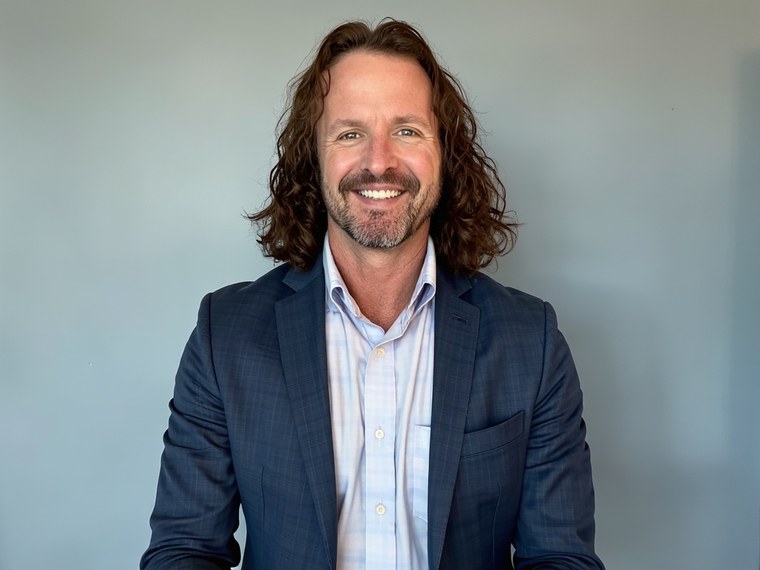
Leadership Team Execution Consultant
I work with growth-stage CEOs whose leadership teams have stopped executing the way they used to, and the usual explanations don’t fit.
The Integrative Teams Method came out of two bodies of work that most people keep separate.
The first is clinical. My training is in AEDP microtracking, polyvagal theory, attachment framework, and developmental theory — the disciplines concerned with what actually happens between people under pressure, and with why patterns persist long after the circumstances that created them are gone.
The second is applied. For years I worked with founders and their leadership teams through peak performance coaching, group work, and relationship work. That work was not framed as organizational consulting, but the questions kept converging. Leaders came in describing a person problem and, once we got underneath it, were describing something structural.
Enough founders asked the same underlying questions that building a formal framework became the obvious next thing to do. That took several years — developing the five domains, building the instruments that assess each one, and working out the four-level intervention architecture. The result is a method rather than a set of instincts, which means it can be applied consistently and explained to the person buying it.
This is the part worth being precise about, because the obvious inference is the wrong one.
Engagements are not therapy, and they are not therapy for a leadership team. Nobody is a patient. The work is structural: how authority binds, how attention gets allocated, how decisions travel, whether specialized knowledge reaches the people deciding.
The clinical training matters because structural work alone does not hold. When you change how a leadership team operates, what surfaces is human — the executive who has learned that raising an objection costs more than staying quiet, the leader whose instinct under pressure is to take the decision back. Most organizational consultants are not equipped to work with that material, so they design around it and hope it resolves on its own. It rarely does.
That training is current rather than historical. I am a licensed mental health counselor and I operate a licensed counseling practice in South Florida. The clinical work is where the pattern recognition stays sharp. It is not the service being offered here.
Every engagement starts with a diagnostic, because intervention designed before diagnosis is generic by definition. The diagnostic is standalone — you can take the findings and act on them without engaging me further, and some leaders do exactly that.
I work with one leadership team at a time in the intensive phase of an engagement. The level three work, in particular, depends on a relationship that can only be built with sustained attention, and a practice structured around volume would not be able to do it.
I will tell you when this is not the right work for your situation. That happens in a reasonable share of first conversations. A leadership team with a genuine capability gap in a specific seat has a hiring problem, not a structural one, and no amount of architecture work will fix it.
M.S. Licensed Mental Health Counselor (Florida), Certified Addiction Professional.
AEDP microtracking, polyvagal theory, attachment framework, developmental theory.
Years of work with founders and leadership teams through executive coaching, group work, and relationship work.
Operates a licensed counseling practice in South Florida.
Co-host of The Key, a podcast on the science of peak performance, with Paul Desmond Adams.
Inside Leadership Execution, a weekly newsletter on the five integration domains.
Thirty minutes, no preparation needed. You describe what you are experiencing and I tell you plainly whether this is work I can do for you.